THE WOLVERHAMPTON CONNECTION
It's not just the street names Dudley,
Willenhall, Telford that illustrate the link between Newport and the Black
Country. There is a historic and continuing connection.
In 1896 John Lysaght from Wolverhampton announced his intention to build a
steelworks in the south west. The company purchased land on the river bank on
the eastern side of the river in Newport and built their new works. This was in
1898. A lot of the workers from Wolverhampton moved down to Newport and
descendants of those workers were employed in the works (which was latterly
called the Orb Electrical Steels). The Wolverhampton people were known as 'Ioes'
(pronounced yows) because of their distinctive accents. The firm's works in
Wolverhampton closed in 1901.
A website 'Forlorn Britain' states "Many of the workers had migrated from Wolverhampton, the company had offered employment at the Orb to it's experienced workers and many chose to follow the company to Newport rather than find alternative employment. The influx of workers from Wolverhampton left its mark on Newport, most of the iron workers settled along Corporation Road to the north of the Orb, many of the side streets in this area, Dudley Street, Telford Street, Walsall Street still reveal the towns links with the black country." The area became known as little Staffordshire.
Initially there were 3,000 workers at Newport including 600
girls (they worked three eight hour shifts). This was practically the only works
in the world making thin steel sheet. Lysaght developed the manufacture of
galvanized and corrugated iron and even expanded into Australia.
Initially, to attract him to a site on the east bank of the river previous
proposals for crossing the river were again resurrected to replace an extremely
risky ferry service that had claimed several lives. Hence, the Transporter
Bridge. Ironically, in 1907 Newport Corporation made an out of court settlement
to Lysaght's Steel Company for damages incurred as a result of the unexpected
tolls on the new Transporter Bridge.
In 1913 the number of mills at the Newport site increased from four to forty. The outbreak of the First World War in 1914 caused a major disruption to Lysaght's commercial plans. The Orb's output was turned over to the production of steel for trench plates, helmets and other military hardware including vast quantities of cartridge brass. The war had a severe impact upon the companies export trade especially in the Australian market which entirely depended on Britain for steel imports. Once peace returned Lysaght's main priority was rebuilding its international business.
The company prided itself on employee relations and shut the plant for the nine days of the General Strike rather than endure the industrial unrest.
The steel
sheet industry progressed rapidly particularly in the 1930's as the private
motor car increased in popularity. At its height during the second world war
3600 people were employed at the site.
The area encompassed by St. Patrick's Parish was formerly part of the Parish of
St. Mary's, Stow Hill. The expansion of Newport onto the east bank of the River
Usk was prompted, in part, by the establishment of a large steel works by John
Lysaght Ltd. The workforce included many Catholics from the Wolverhampton area,
prompting the establishment of a Parish Mission in 1909 at 442, Corporation Road
– now the Columba Club.
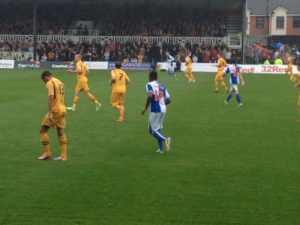
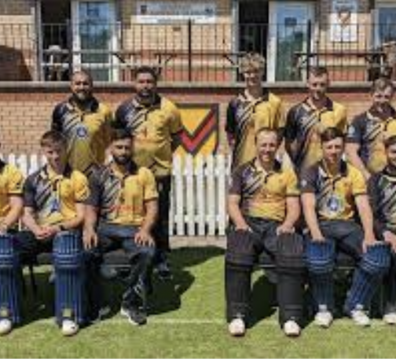
Newport County was formed in 1912 mostly by workers drawn from the Lysaghts
works. The club's colours were the same as the colours worn by Newport rugby
team but were also similar to the Wolverhampton Wanderers colours which were
appreciated by the ex midlanders among the Lysaghts workers. Whether they were
adopted primarily because they were Newport's colours or because of the midlands
connection isn't clear. Legend has it that every Saturday night the football
edition of the Wolverhampton Express & Star would be sent down by train from the
Black Country to be sold in newsagents off Corpa Road on a Sunday morning. The
County's original team nickname of 'Ironsides' was chosen because of their
connection with Lysaghts. In addition, most of the County's early professional
players were drawn from the Midlands area.
On July 23 2010 the Express and Star carried
the following story commemorating the link between the two cities "An historic
link between Wolverhampton and Newport was celebrated when a group of cyclists
from the Welsh town set off from Molineux to ride the 100 miles to their own
football ground. The riders, from Newport County FC, were peddling between the
two stadiums to raise funds for the Help For Heroes charity ahead of a friendly
game tonight against a Wolves Development XI. The south Wales club was founded
by a group of Wolverhampton steel workers who went to the town after
manufacturer John Lysaght opened a factory there in 1898 and closed his Horseley
Fields works three years later. The Wolverhampton employees made up the bulk of
the Newport County team and adopted amber and black as their colours."
Managing Director of the company, WR Lysaght, bought the Somerton Park ground
from the landlords of the site in 1919 for £2,700 following an appeal from his
work men. He transferred ownership to the Lysaght's Works Committee who then
leased the ground to newport county. Mr Lysaght was president of the club until
1940.
The W. R. Lysaght Institute was a working man's club built in 1928 for the
workers who came to work at the Lysaght steel plant in Newport. The facility
included ballroom, billiard room, skittle alley, public bar, saloon lounge with
many washrooms and cloakrooms.
In 1936 WR Lysaght was made a freeman of the borough of Newport. He lived in
Tidenham near Chepstow until 1945. In 1914 he bought Chepstow Castle and began
conservation work to restore the Castle. In 1953, the Lysaght family put the
castle into the care of the Ministry of Works. W. R. Lysaght died in 1945 and
his Tidenham property was sold by his son Mr. D. R. Lysaght before 1950.
The magnificent Lysaght's Institute has now been restored as part of a
regeneration project, see the following links for more information about this.
http://www.lysaght-institute.com/
http://www.youtube.com/watch?v=fSVuWpc4E0Q
![]()